About
I'm a machine learning engineer working on computer vision, multimodal models and large language models. I build systems that understand images and video, and language models that answer from evidence rather than from memory.
I care most about reliability: whether a model still works outside its benchmark, and whether a person can check what it says. That shapes how I build models and how I evaluate them.
I'm open to research collaborations in these areas. If you're working on something related, I'd be glad to hear about it.
Research interests
- Computer Vision
- Large Language Models
- Multimodal & Vision-Language Models
- Medical & Biomedical Imaging
- Trustworthy AI
Across all of these, I'm drawn to one question: do models still behave reliably once they leave the benchmark?
News
-
2026
Paper
Submitted Joint Prediction of UHPC Properties Using a Feature-Tokenizer Transformer to Applied AI Letters. It's under review.
-
Jan 2025
Career
Joined Accelx Inc. as a Machine Learning Engineer.
-
Jan 2021
Thesis
Graduated from AUST with a thesis on arrhythmia classification using 2-D CNNs.
Selected projects
All projects →-
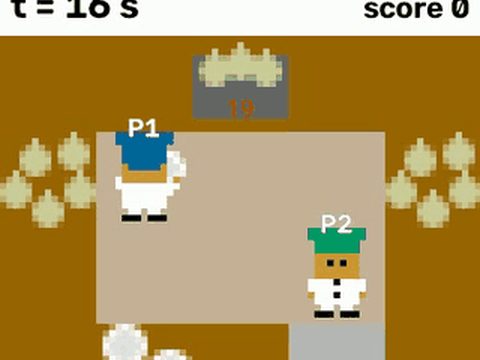
1. Overcooked AAR — evaluating video-language models
GitHub repository ↗Can a Video LLM review a human team's play as well from video as from the game's event log? I had Qwen2.5-VL and Qwen3-VL write after-action reviews of real two-player Overcooked games both ways, then checked every timestamped claim against the log. On 15 episodes, claims from the log were 67–93% precise against 22–43% from video, and the video timestamps were no better than random.
-
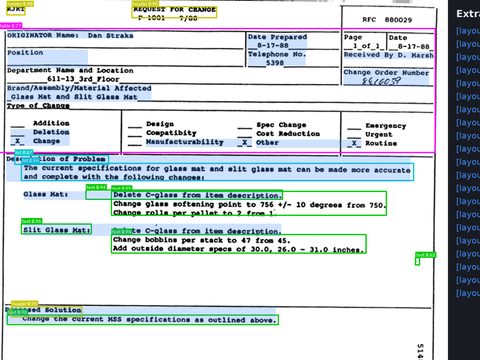
2. DocuVision — key–value extraction from scanned documents
GitHub repository ↗DocuVision turns scanned forms, PDFs and phone photos into structured key–value pairs. I fine-tuned LayoutLMv3-large and built a learned question→answer linker. On FUNSD, pair F1 rose from 0.23 to 0.74 with ground-truth words, and from about 0.15–0.17 to 0.43–0.46 end to end on the raw scans with OCR. I released the model on Hugging Face.
-
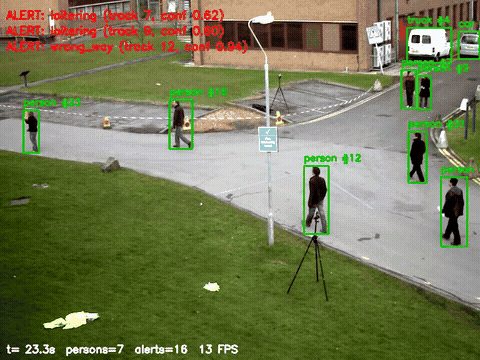
3. Sentinel — tracking-based video anomaly detection
GitHub repository ↗Sentinel watches a video stream and raises alerts for falls, loitering, abandoned objects, crowding and wrong-way motion. I combined YOLOv8 detection and BoT-SORT tracking with a rule engine and deduplicated alerts, and the whole pipeline runs at 19.7 FPS on an RTX A5000.
-
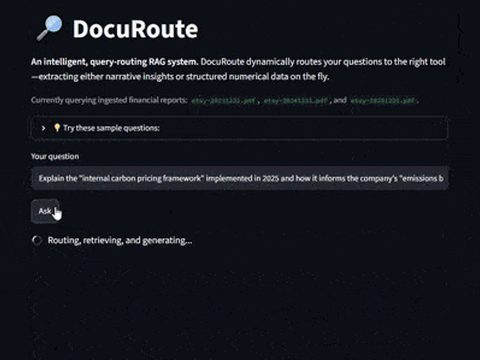
4. DocuRoute — routing between retrieval and text-to-SQL
GitHub repository ↗DocuRoute answers questions about SEC 10-K filings with citations. An LLM router I built sends each question to hybrid retrieval or to sandboxed text-to-SQL. In my evaluation harness, a general-domain reranker lowered faithfulness from 0.93 to 0.77, so I kept plain hybrid retrieval as the default.
Let's collaborate
I'm open to research collaborations, especially on vision, video, or language models. A short email about what you're working on is the best way to start.